Whites
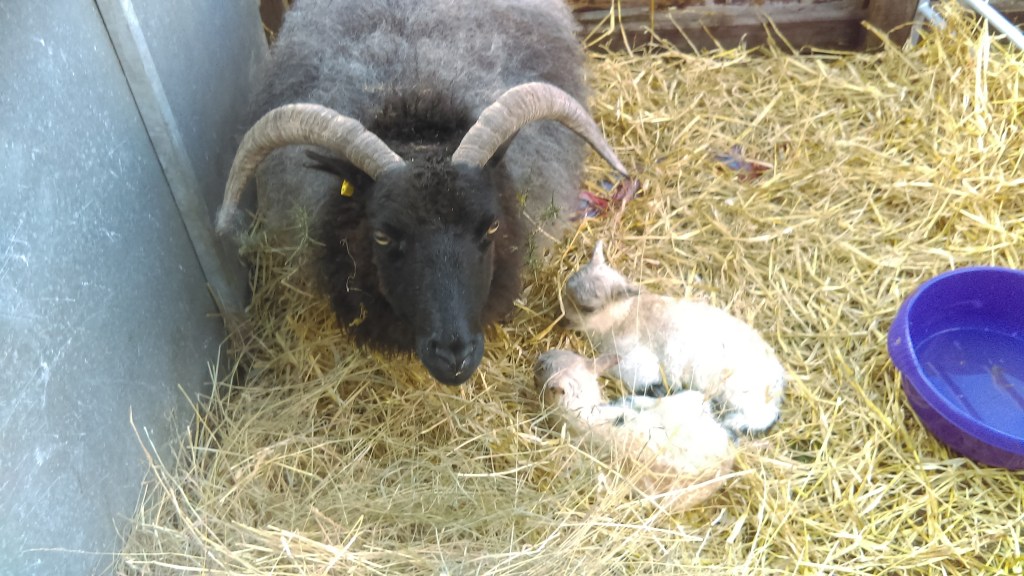
In 2016, during the first lambing at the Hirsel in over 30 years – and the very first for our family with Hebrideans – we were shocked to see our black ewe Greenal – tupped to a black ram -produce a white ewe lamb. Since then, Greenal’s line (and only her line) has delivered multiple white lambs, with various registered and non-registered rams. They don’t only deliver whites, though: they will often deliver black lambs, or black/white twins. So we treasure our whites, and only started selling them once we had bred three generations.
Our first white ram lamb was finally born in 2020. In 2021 we bred our black, registered, 4-horned ram (Tigh Gorm Lachie) to some of our white ewes, and at lambing in 2022 celebrated the births of our first white four-horned ram lambs.


Raddies
Agnes, our little redhead, was also born in 2016. While many Hebs’ fleeces will bleach in the sun, some can be genetically prone to reddish/lighter brown colour, no matter the weather. In days of old, before Hebs were selectively bred for the black lines, these were called Raddies. It’s easy to recognize Agnes’ family among our flock, as they all sport the fluffy cheeks and red tints of her line. When she was ill after a difficult lambing, she turned grey, as sheep can do when ill, and as she healed, her reds came back in a gorgeous motley of grey, mauve, and black. As her younger sister ages, we see this motley showing in her wool too, though she hasn’t experienced the same difficulties as Agnes. Now, in 2025, Agnes’ fleece isn’t as strong as it once was, but as it’s lightened in old age, it’s become a beautiful golden colour, which will make a great rug.


Silverbacks
It’s normal for Hebrideans to turn grey as they age. This often starts around the muzzle or flanks. But some Hebs turn grey earlier – we had a healthy ewe turn grey after her first shearing, and she’s remained grey since. Like human hair, genetics, diet, and illness can affect a sheep’s wool, and there’s some thought that mineral deficiencies in the rough Scottish grazing this breed thrives on are the reason these young Silverbacks were seen by 19th century tourists when the breed still grazed the Scottish Highlands and Islands. It could also be that, in those days, shepherds with smaller flocks kept their older sheep longer (as we do at the Hirsel), so age-related greying might have been more prevalent in the breed. Whether because of genetics, diet or age, we love our Silverbacks, and their wool makes for stunning felted rugs.


That stray ram…
We are not geneticists, and find the subject hard to keep straight in our heads. So our knowledge of this breed is from lived experience. And whatever reading we can find – though that is hard to find. But we also keep detailed genealogy records for all our animals, registered or not, so are intimately acquainted with who’s tupped who.
When our first white lamb appeared, we were understandably surprised. Others told us a stray ram must have got into our field – the common brush-off white Heb owners have heard over the years. But there has never been a stray ram messing about in our fields, with our ewes. In fact, we’d like to see the ram who could jump into our field, tup one ewe – and only one – then leave with his life, while our own ram stood idly by!
We breed ‘pure’ (we do not cross our Hebs with other breeds). And we must also trust the word of the keeper who sold us our first batch of thirteen sheep (as well as the suppliers of our subsequent registered rams), and swears they were pure and never crossed. He also did not see any evidence of white lambs in his flock, though we wonder if whites were born, but did not survive to be seen, as our own flock tried to ostracise our first white. Through the years, we’ve also picked up stories of white lambs showing up in other flocks – though most were culled as not fitting the breed standard. Luckily for proponents of a wider and historical breeding norms, this habit of culling is lessening, as the whites become valued for their uniqueness, beauty, and fleece.
Since we started down this road, we’ve also used multiple tups – registered and unregistered- and find that the colours definitely run via the female lines. So our tup or another, it is genetic, and carried through the female line on our farm. 2022 was the first time that two of our white rams were used for breeding (one here, and one on another farm), so the 2023 lambing season told us that the white gene is being carried by our males too, if they are descendents of Greenal.

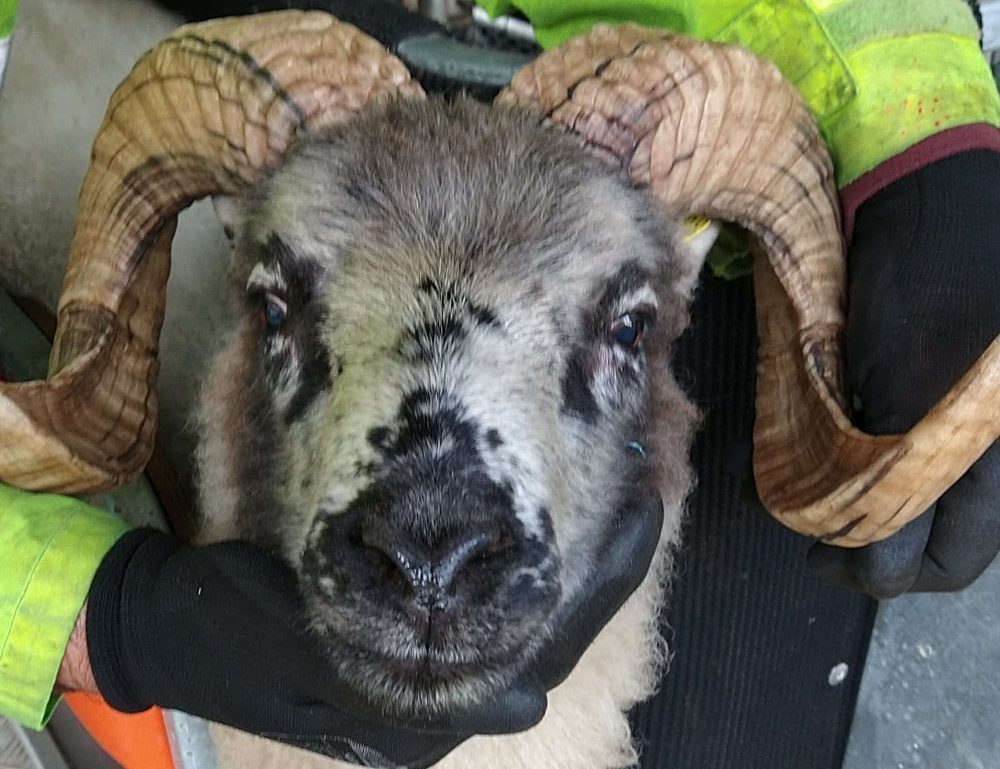

At the Hirsel, we’re committed to breeding the modern Breed Society standard line, as well as our Rebel Hebs with all their diversity of size, colours, and horn configuration. To celebrating and preserving the wide genetics of this ancient Scottish breed.
Further reading:
https://www.hebrideansheep.org.uk/
Black Sheep of Windermere, by David Kinsman
 The Hirsel